Street of the Dead
Part 1…About the “street”
Generally, the street from the entrance of the Plaza of the Moon to the southwest corner of the west side of the Ciudadela is called the Street of the Dead. Looking at a tourist map, you can see a beautifully straight, thick street running through the city. You can see that it is indeed a main street.
Looking at handwritten maps from the Mexica or Spanish era, there are no maps that outline the divisions of the five plazas. It is possible that the semi-underground plazas remained covered in sediment until fairly modern times. It is possible that the Mexica, who named them, walked along the central part of the Street of the Dead, which had almost no ups and downs, and never dreamed that the semi-underground plazas were buried beneath them.
But if you go there, go from north to south, and pass the Pyramid of the Sun, you will see a large, low rectangular expanse.

↑First semi-underground plaza.
Even from the south, if you cross the bridge over the San Juan River, you can see the 2-meter-high retaining wall looming over you.
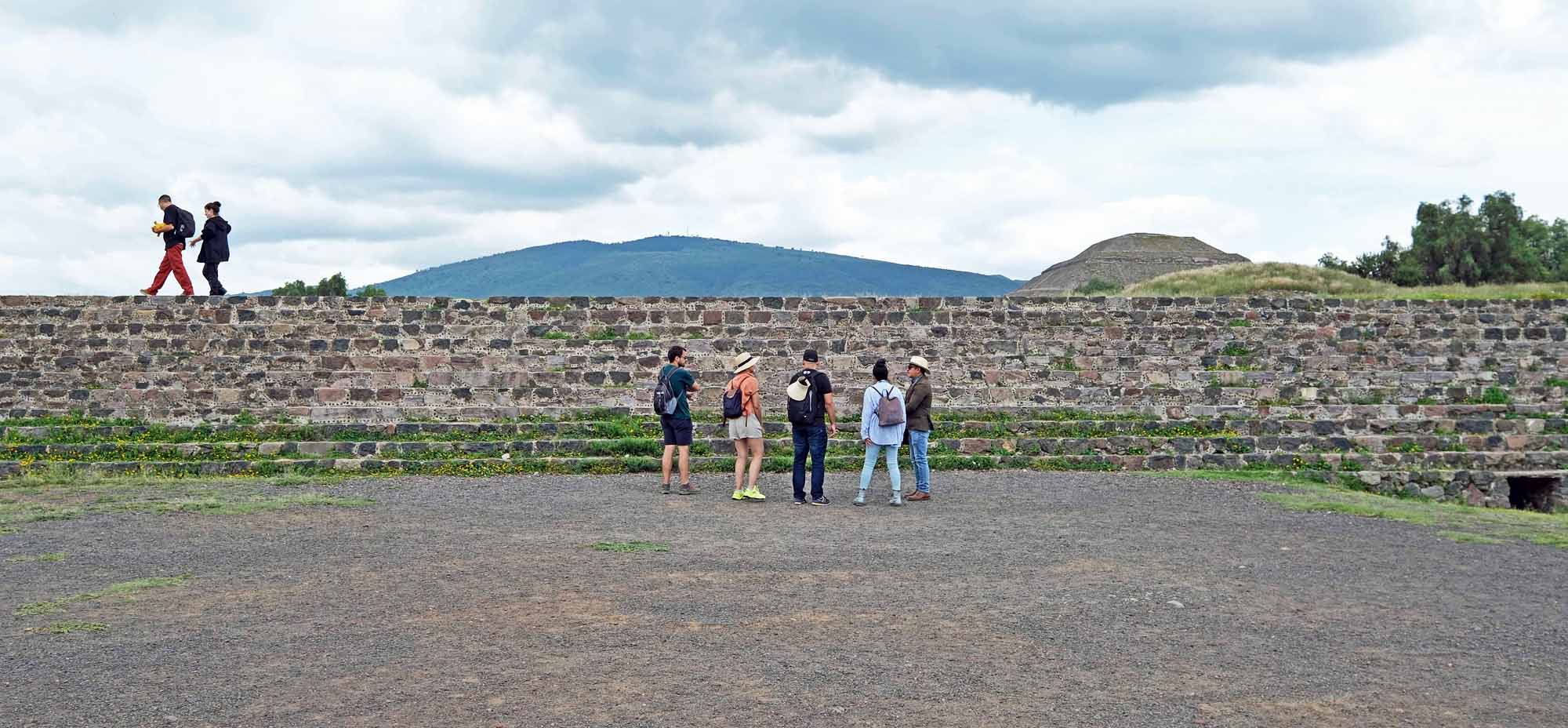
↑Retaining wall south of the 5th semi-underground plaza.
Neither of these can be called a road. There are no small paths to be seen on either side (east or west sides) of the semi-underground plaza in the middle of the Street of the Dead. The structure of the Street of the Dead is shown below in a diagram. The name "First Semi-Underground Plaza" was my idea.
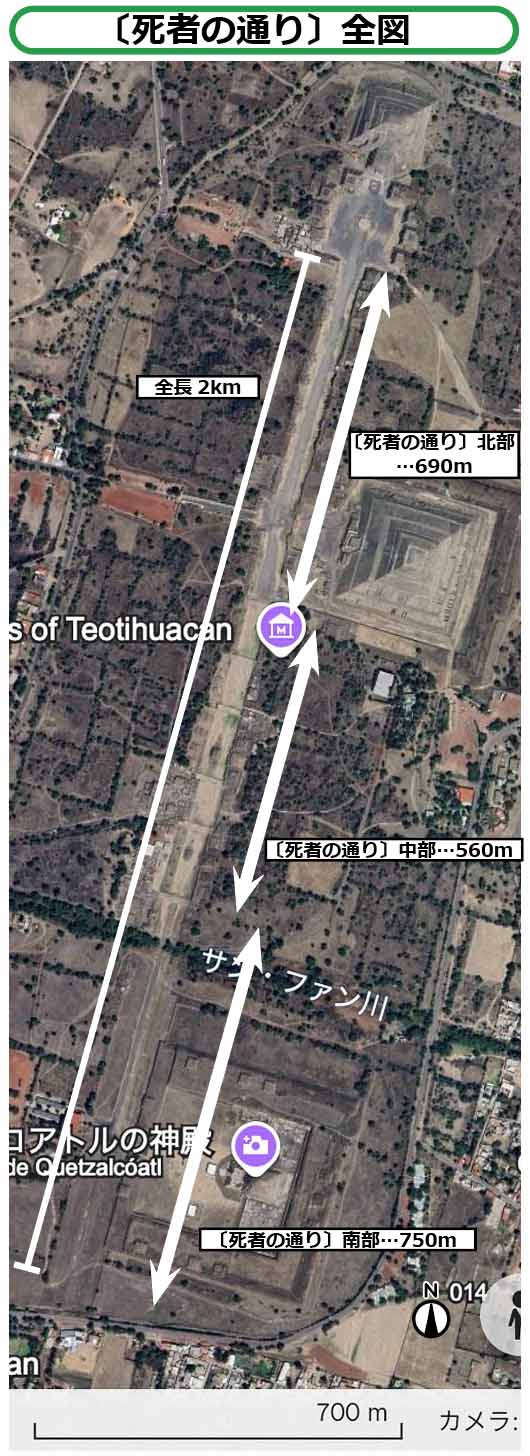
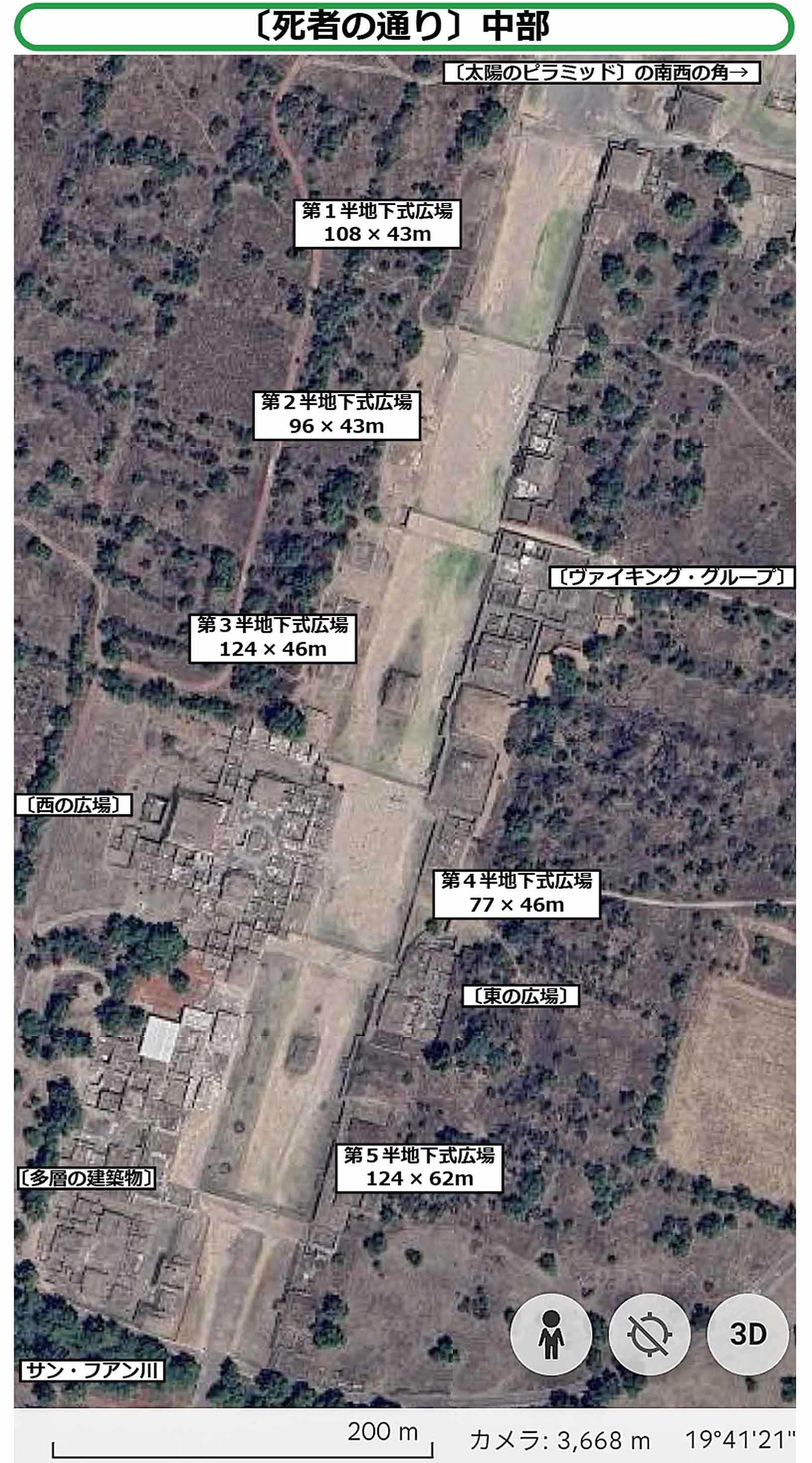
↑on Google Earth。
Let's start from the north.
First semi-underground plaza...
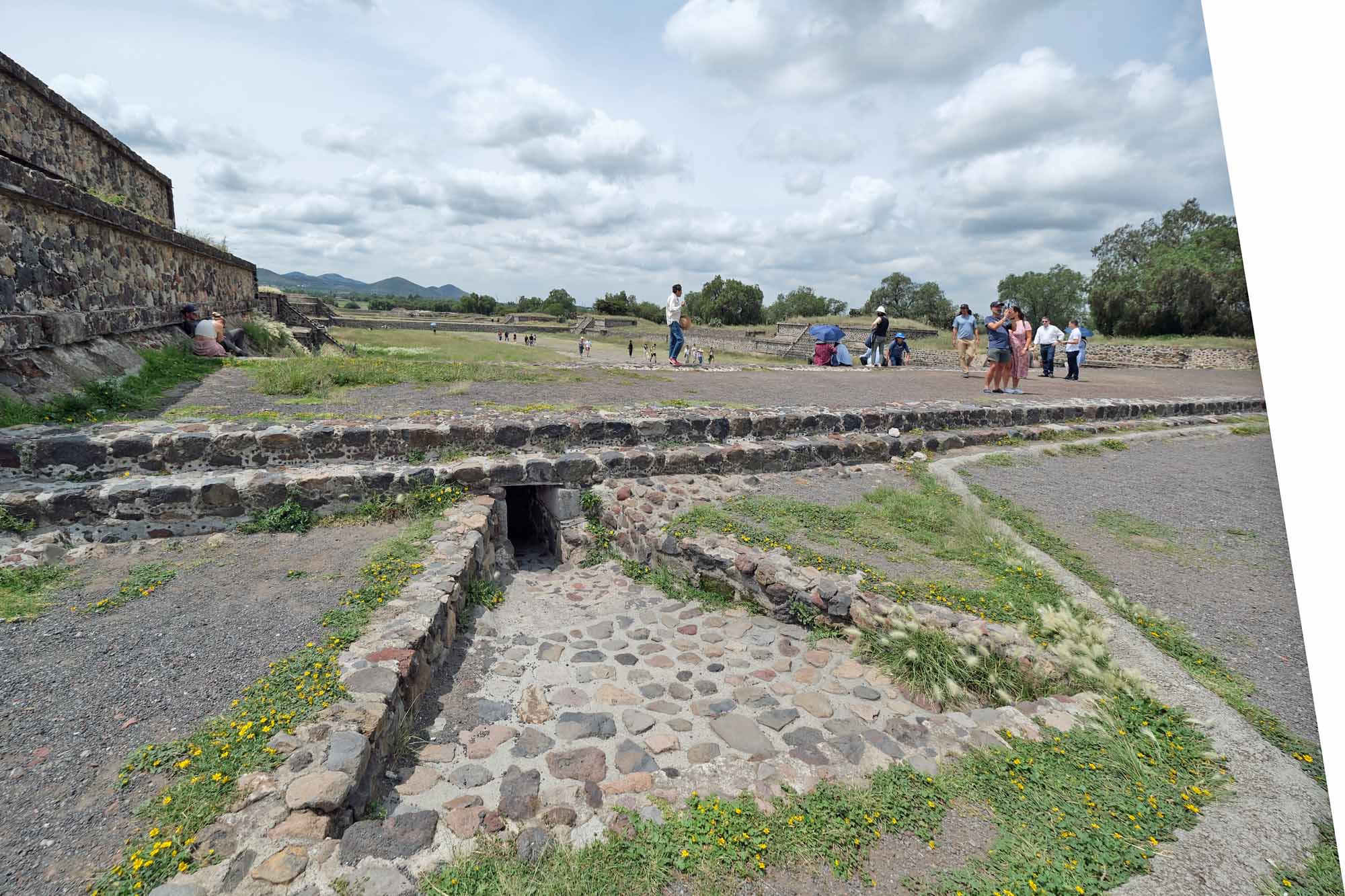
Looking south. The Pyramid of the Sun is in the foreground on the left, and the paved surface on the right is the southern end of the northern part of the Street of the Dead. The structures for absorbing and draining water from both sides are visible.
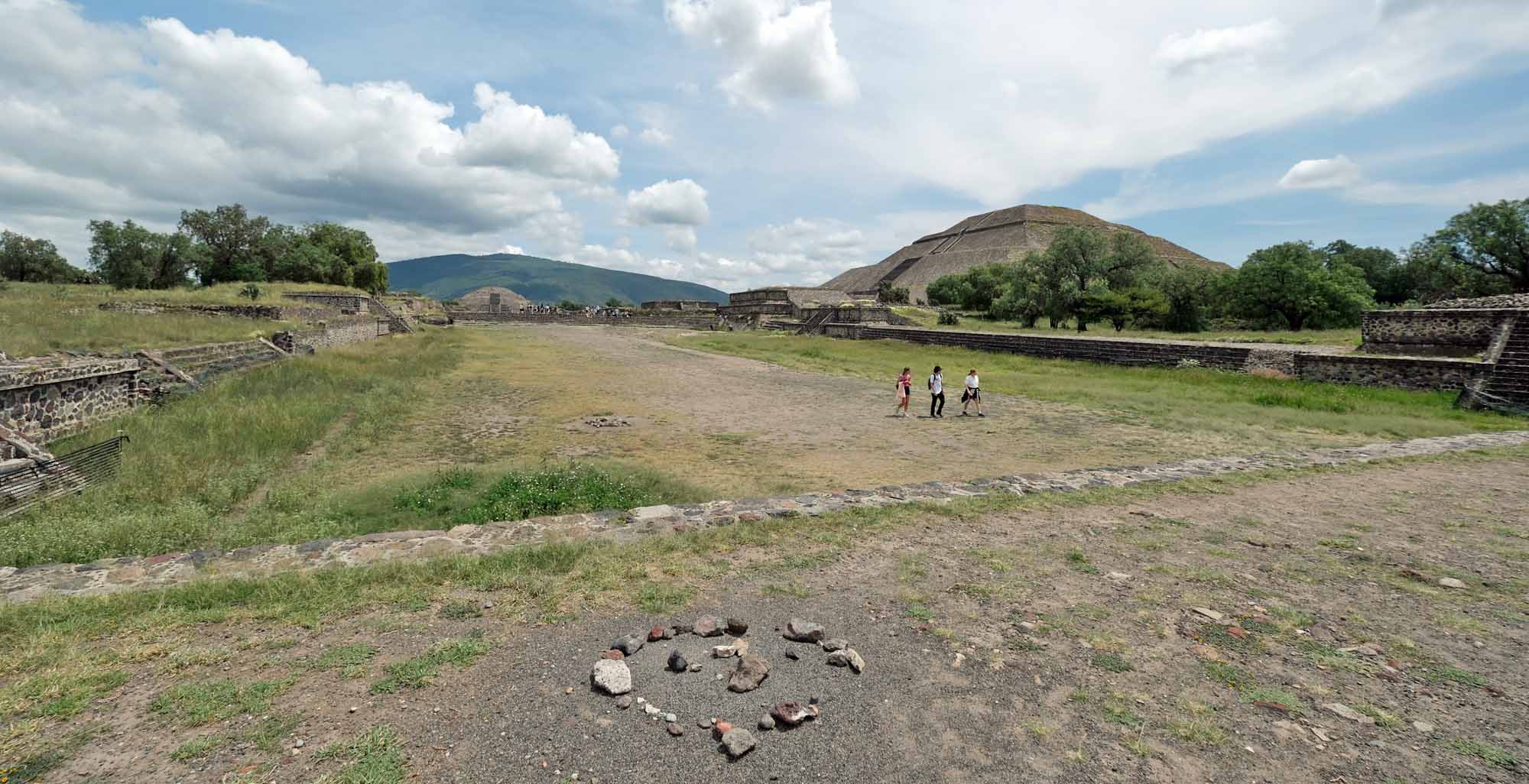
Looking from the south. The thin line of grass on the left is a drain cover.
Second semi-underground plaza...
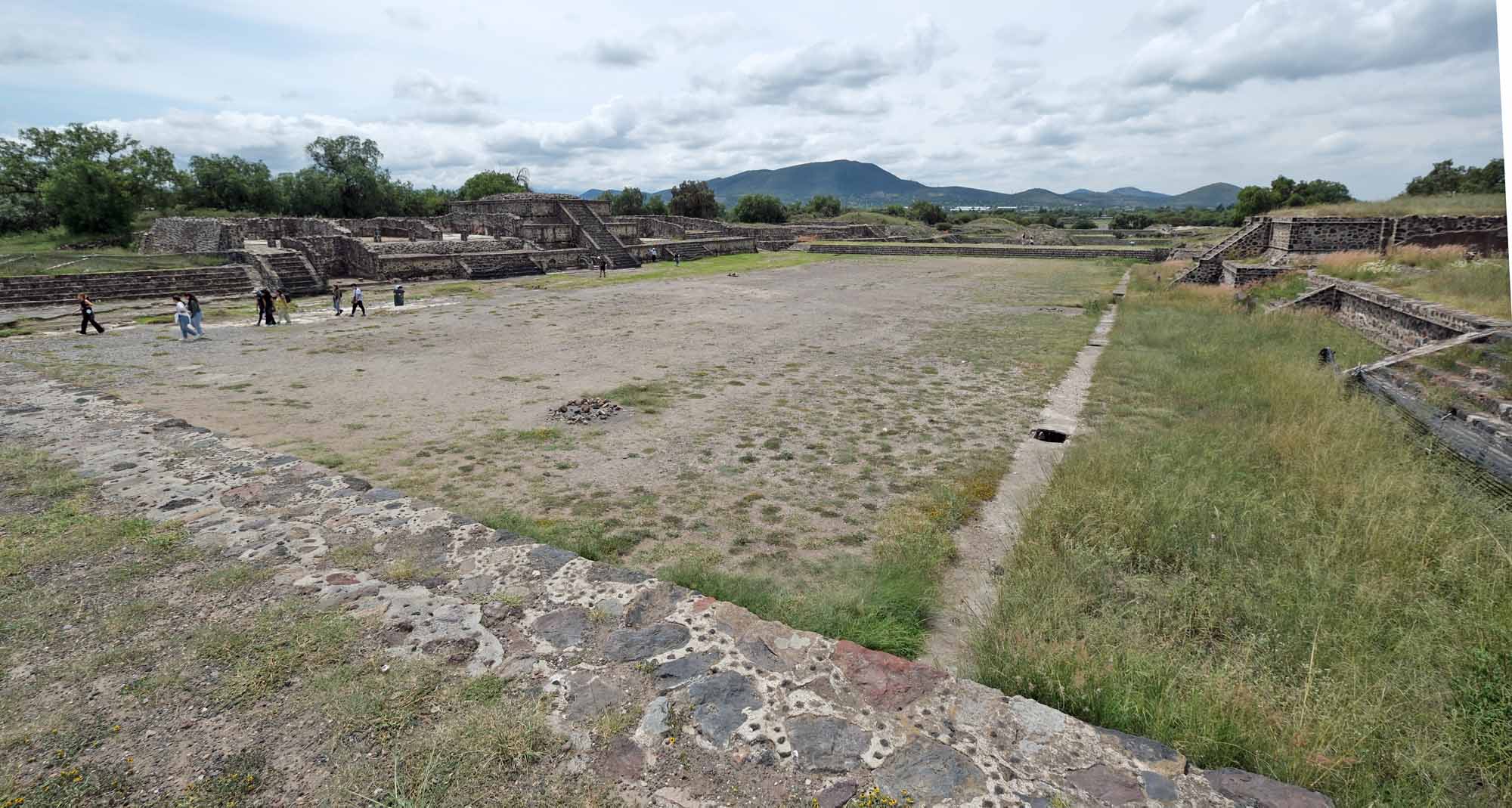
Looking south. The drainage ditch is on the right. The Viking Group is on the left. All the stairs lead directly to the plaza.
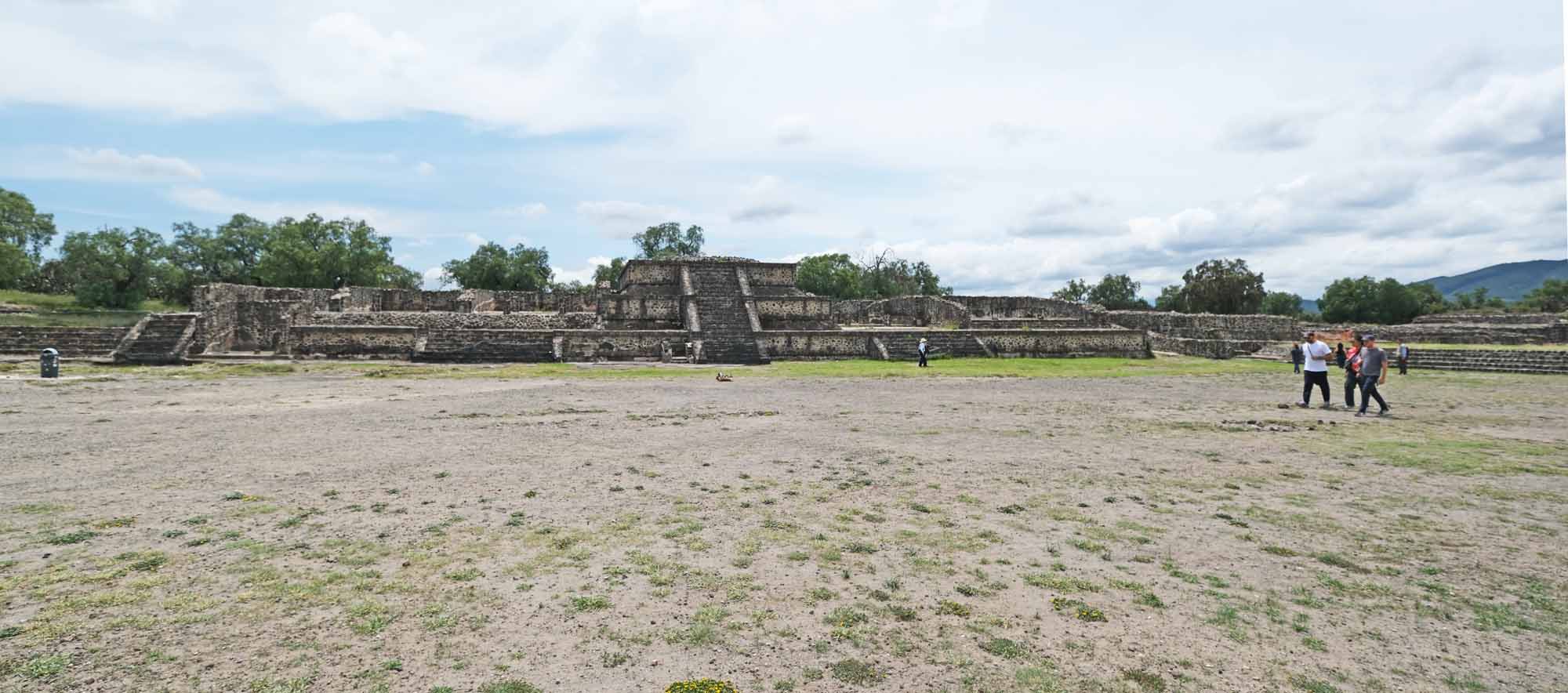
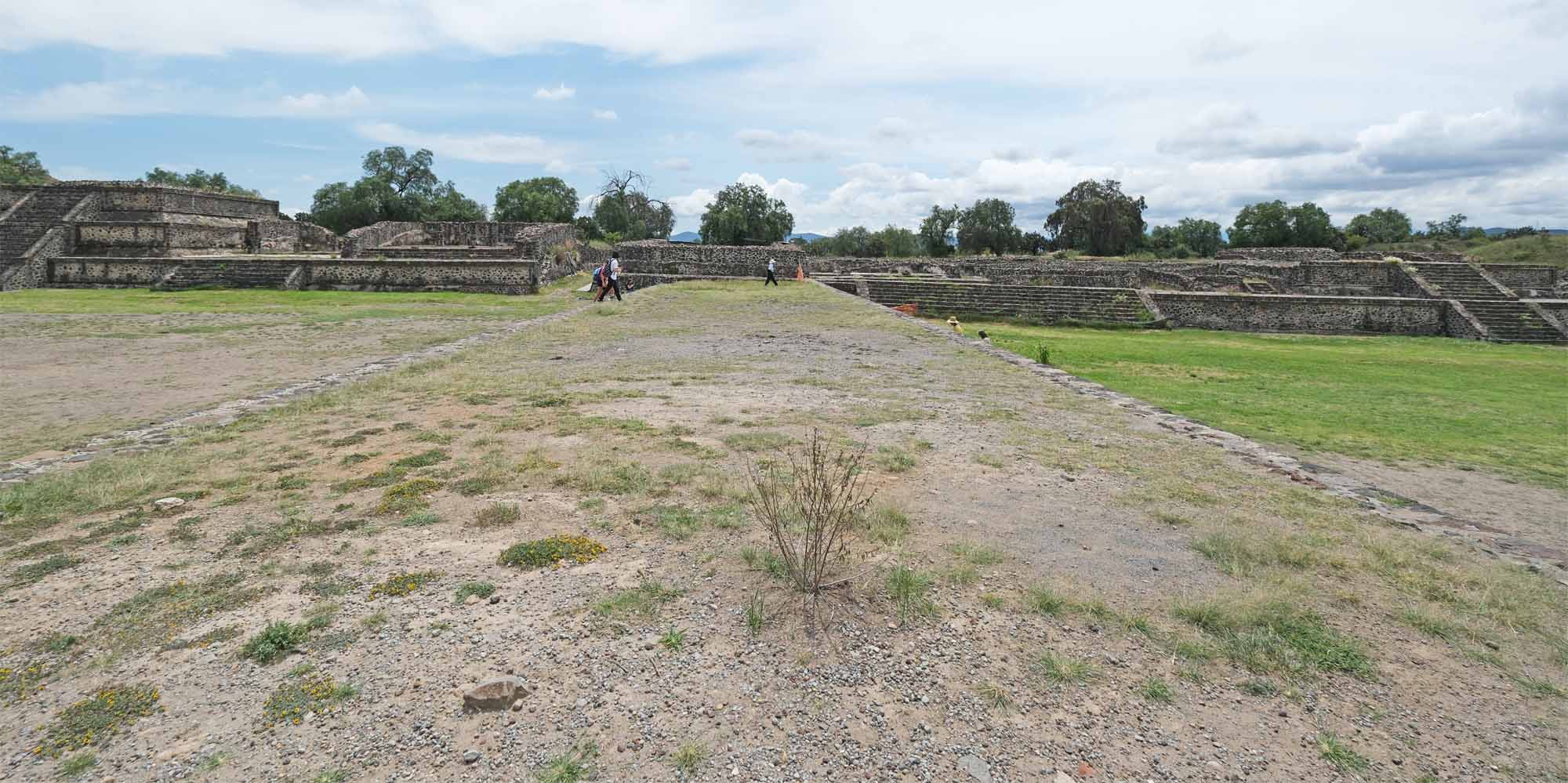
This is the causeway separating the second and third plazas. It is about 10m wide. The third section is lower than the second section.
Third semi-underground plaza...


There is a building in the center. The first floor is probably in the Talud style. It is unclear whether it can be considered an altar.。
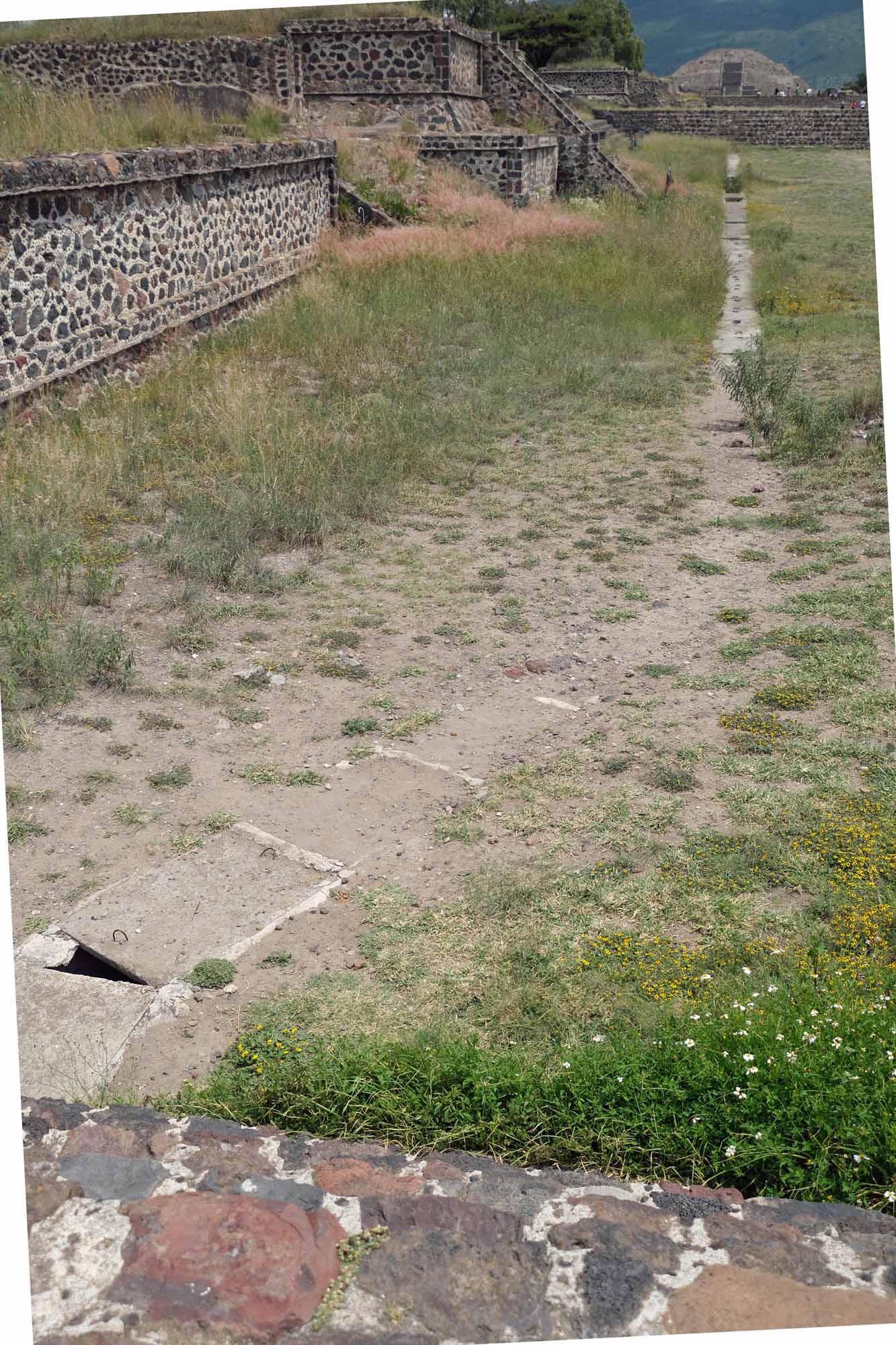
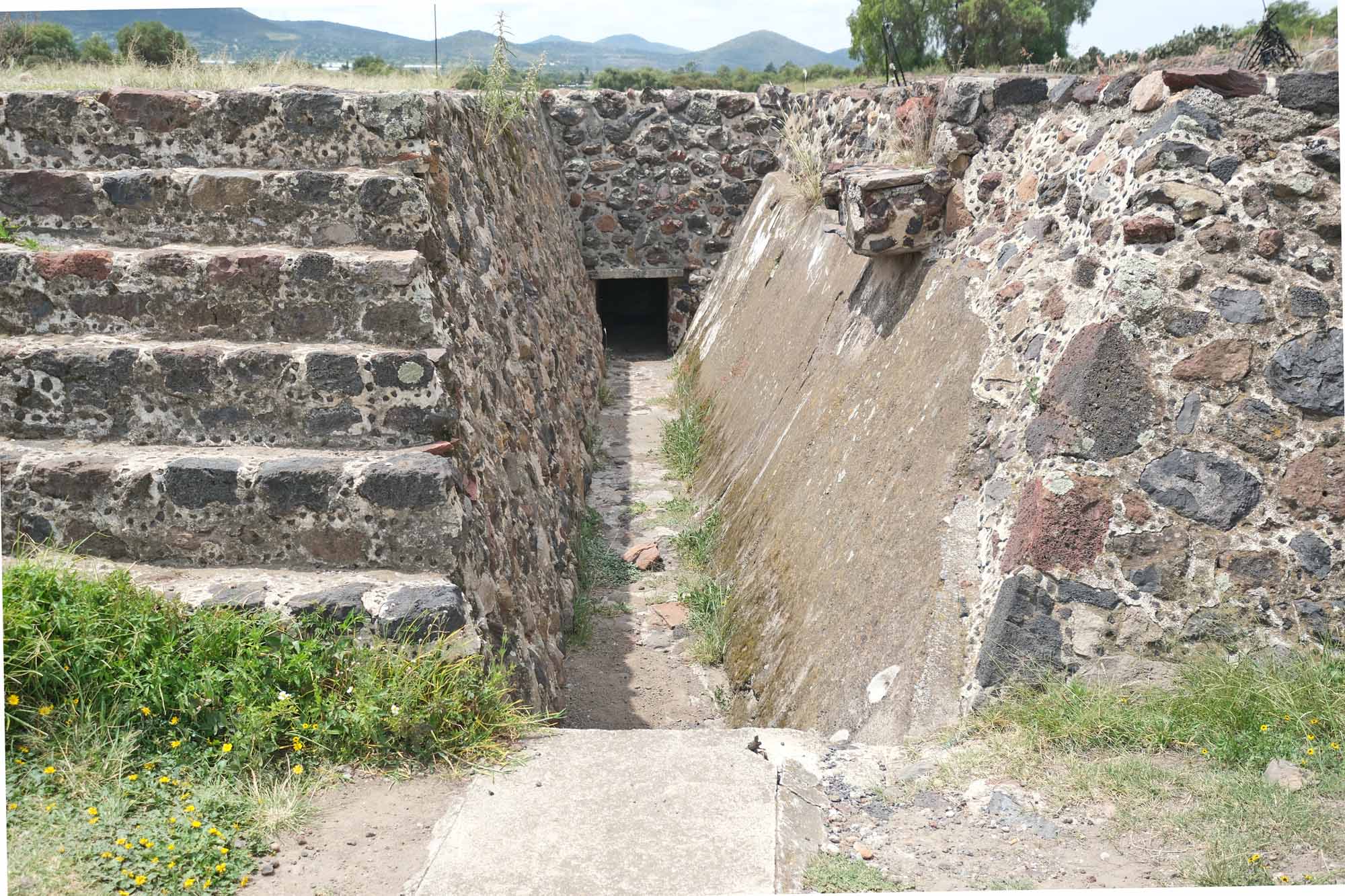
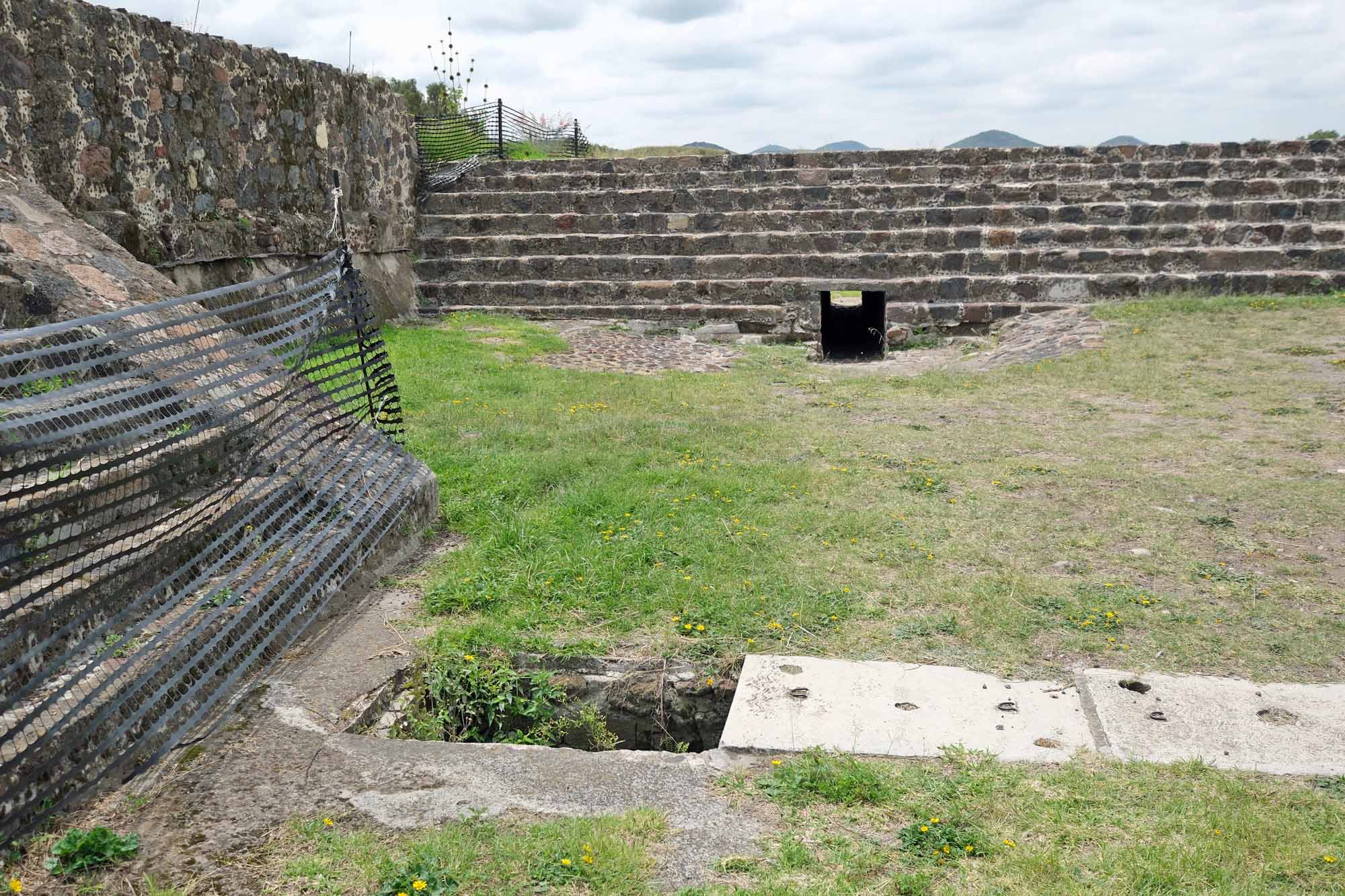
Fourth semi-underground plaza...
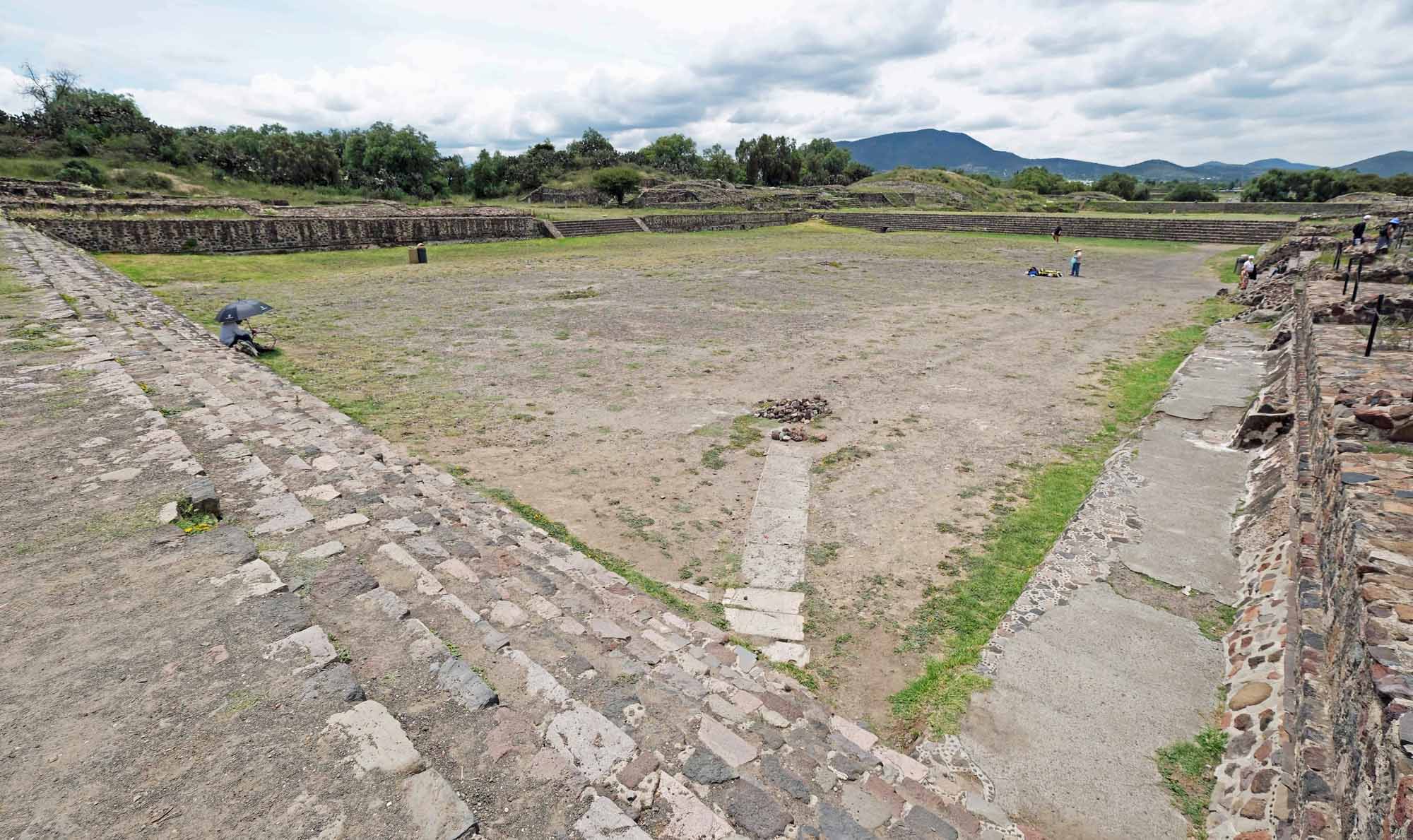
Fourth, there is no altar. The east side of the [West Plaza] is visible on the right, and the [East Plaza] ↓ can be seen to the east.

This is the causeway between forth and fifth.
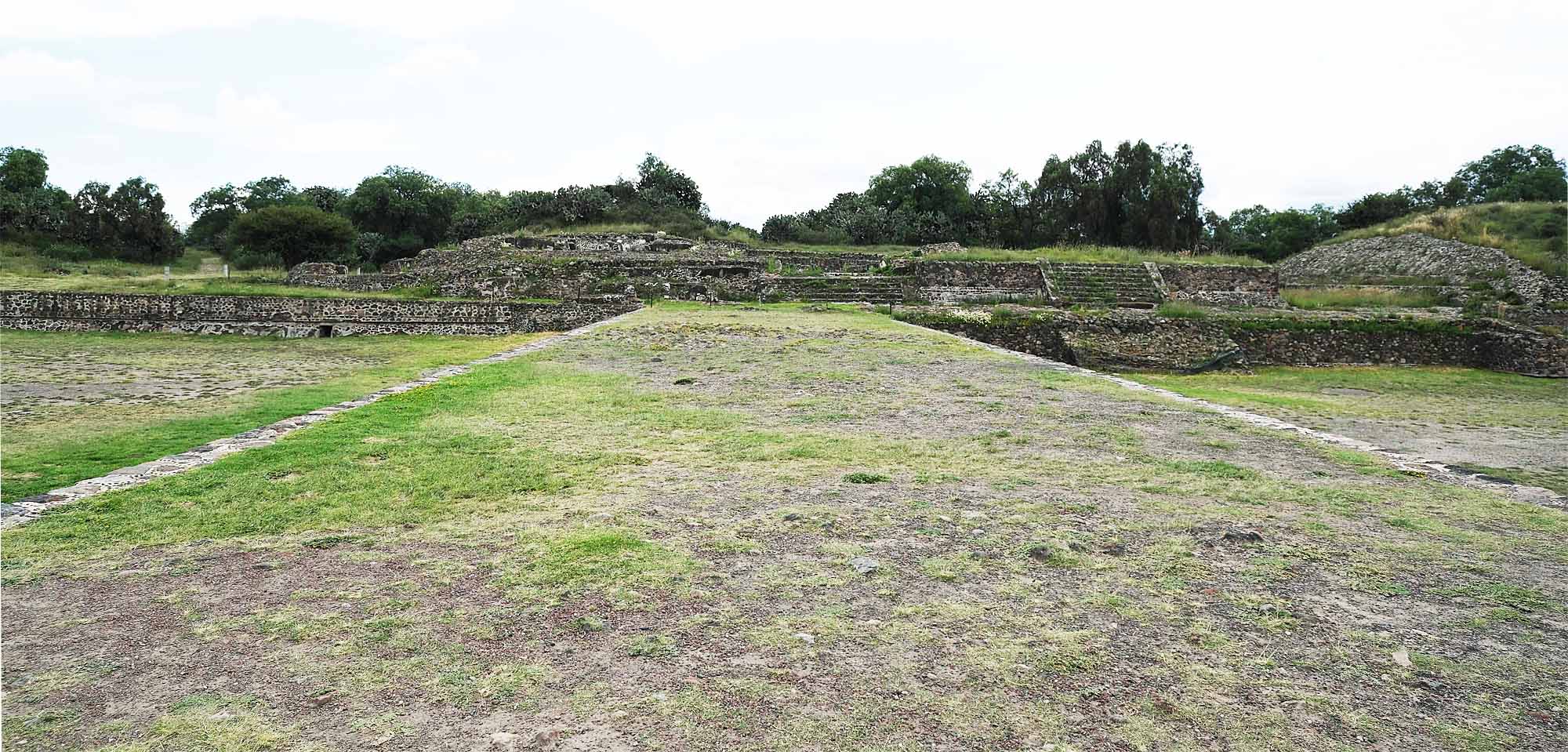
Fifth semi-underground plaza...
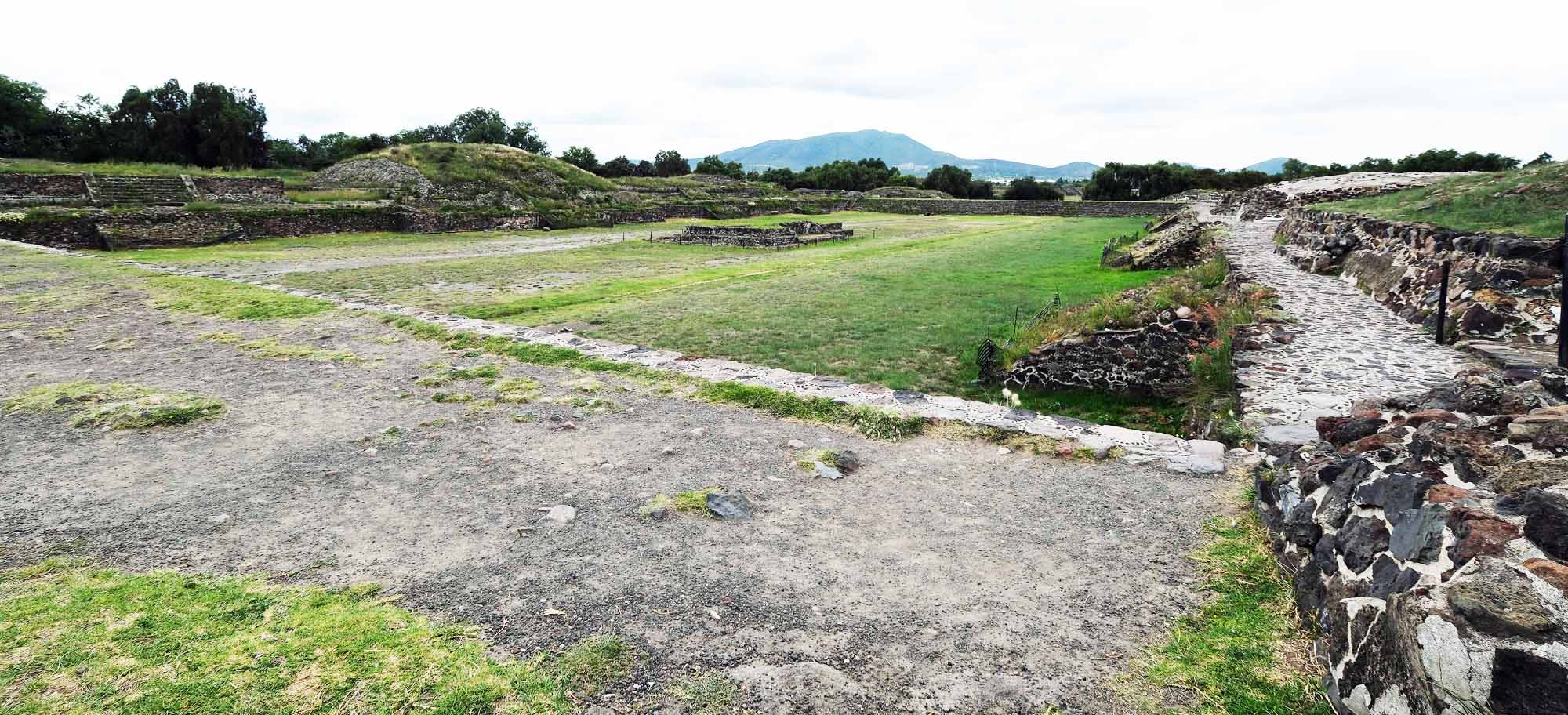
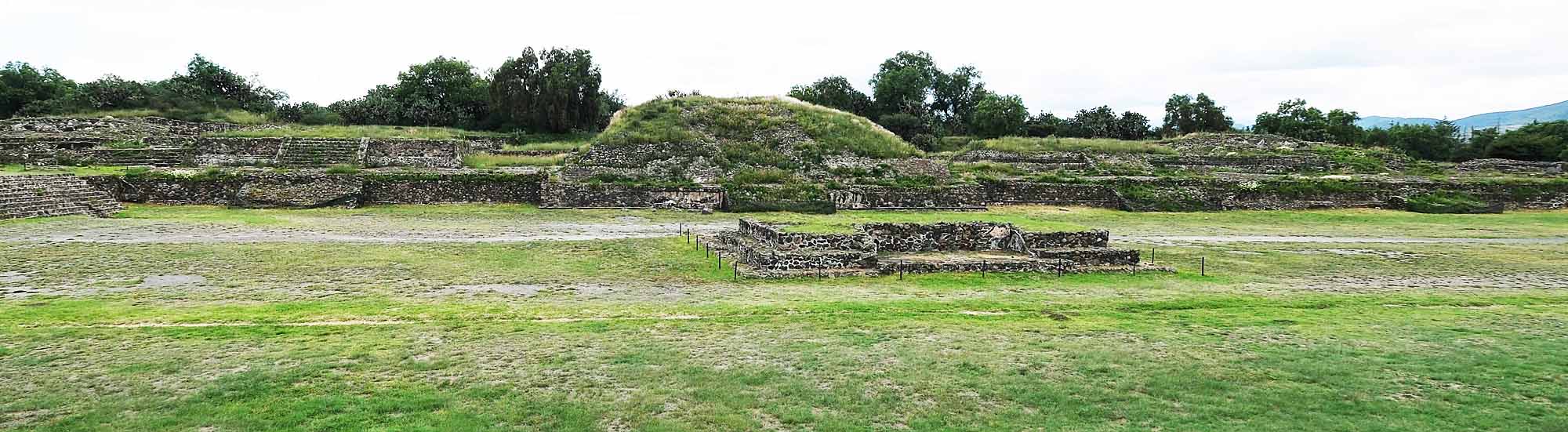
There is a platform here↓. It appears to be different from the third one. There is a mound on the east side. [East Plaza] This part of the complex appears to have not yet been excavated.
Return to the southern end of the northern part of the Street of the Dead and look south down the central part.
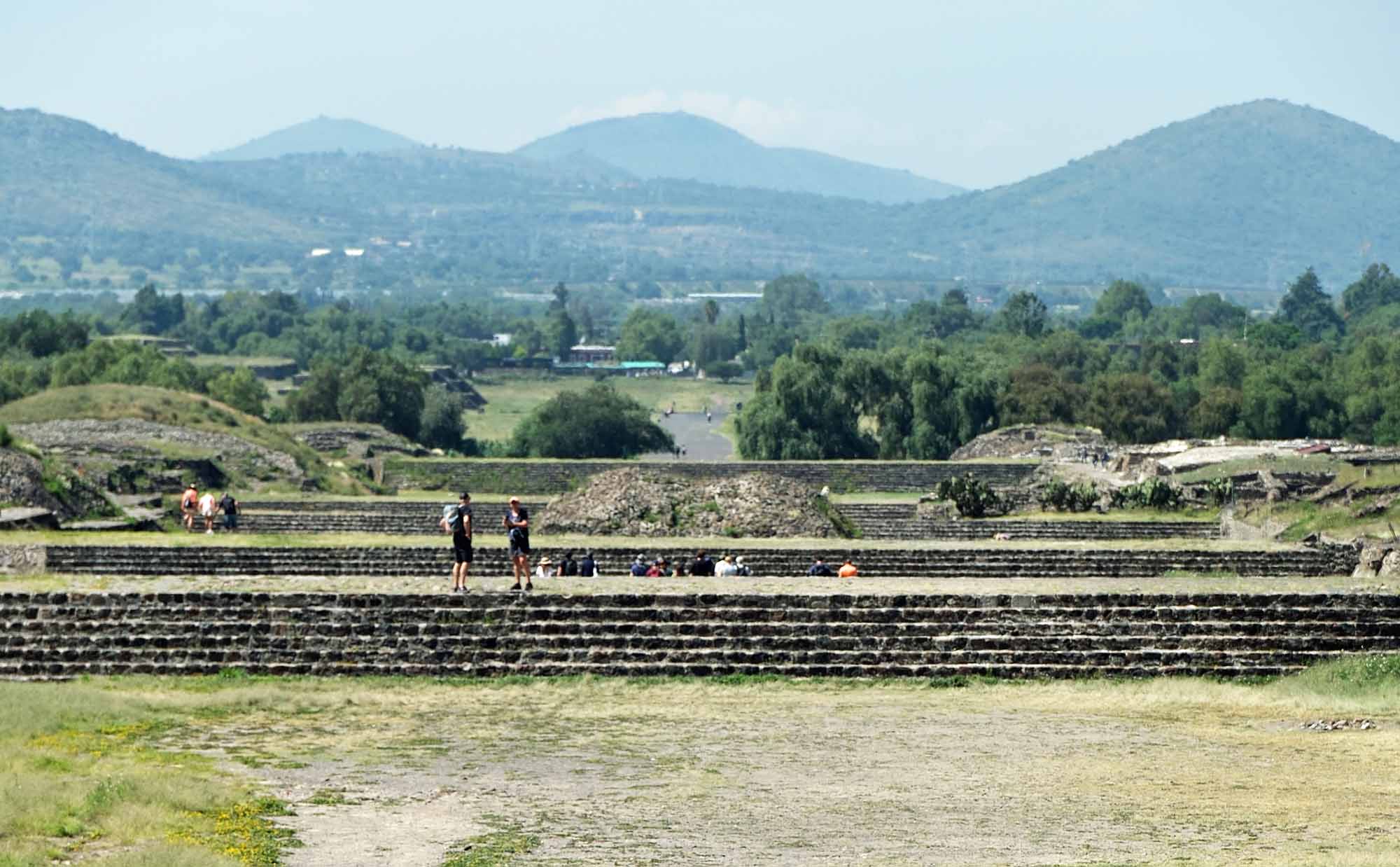
The first is in the foreground, and the fourth is visible in the photo, with the fifth lower down behind them. It may be an inappropriate way to put it, but it looks like a stadium for climbing contests. You can see part of the platform of Ciudadela on the left side of the center of the photo.
The first through fifth complexes all have some things in common: they are low plazas, separated by causeways several meters high, run through by drainage ditches, and there are no paths between the bottom of the plaza and the adjacent complexes. The only thing they don't have in common is the presence or absence of an altar.。
My impression is that the central part of the Street of the Dead has an atmosphere that would make it impossible for commoners to walk around easily, and that pilgrims from outside would not be able to wander around freely either. It is likely that the basic way of getting around was to use the side roads and paths outside the Street of the Dead.
Moving on to the Pyramid of the Moon, there have been reports that there are water inlet and outlet ports in the corners of the Moon Plaza.
It is also reported that Ciudadela had a water inlet in the northeast corner, a waterway nearby for sacrifices, and a drain in the southeast corner. Some books contain photographs of the large plaza on a rainy day, with rainwater pooling in the plaza to form what could be called a square lake. In religious terms, this could be the mythical "primordial sea."
If water is not to be stored, there is no need to make them semi-underground. Digging requires extra effort, and if rituals/assemblies are to be held during the rainy season, the water cannot be drained quickly. The reason all the squares are low and semi-underground is because the purpose is to use the stored water as part of the stage for rituals. There were also several water tanks in the nearby apartment complexes that we have seen so far.
I created a water stage map focusing on the Street of the Dead.

If this were true, it would mean the completion of a magnificent water stage over 2 km in length. Although it is conceptual, the countless thick circles symbolizing the god Tlaloc are painted all over Teotihuacan, likely because they wanted it to be a "city of water."
Only the government could organize such an event. Maintenance and cleaning may have been entrusted to the people who lived in the central temples/residences facing each of the semi-underground plazas.
Part 2…About the “Dead”
Who first used the word "dead" and when? The most likely theory is that the Mexica people heard the word from the few people who lived there when they visited in 1300 AD and recorded it in a pictorial document.
However, if we look at the number of deaths, 120,000 people lived there for 450 years, and assuming that a new generation is born every 25 years, a total of great number of people must have lived there. And yet, the number of graves excavated so far is far too small - I can't count whether it's 1,000, 4,000, or even 10,000. Where are the bodies? Where did they go?
Sky burial would leave almost no trace, but there are no pottery or murals depicting it, so it is not a possibility. Surely there is no possibility that the area beneath the Street of the Dead was a mass burial cemetery, and no archaeologists have found any traces of it.。
So why did the inhabitants of 1300 AD use the word "dead" to describe the Mexica, and why did the Mexica accept it? There is an interesting point.
1. In the western part of the Maya cultural sphere, graves have been discovered containing bodies wrapped in straw and with stone masks tied to them.
2. In the Mexica capital of Tenochtitlan, a statue of a standard-bearer leaning diagonally against the central staircase has been excavated.。
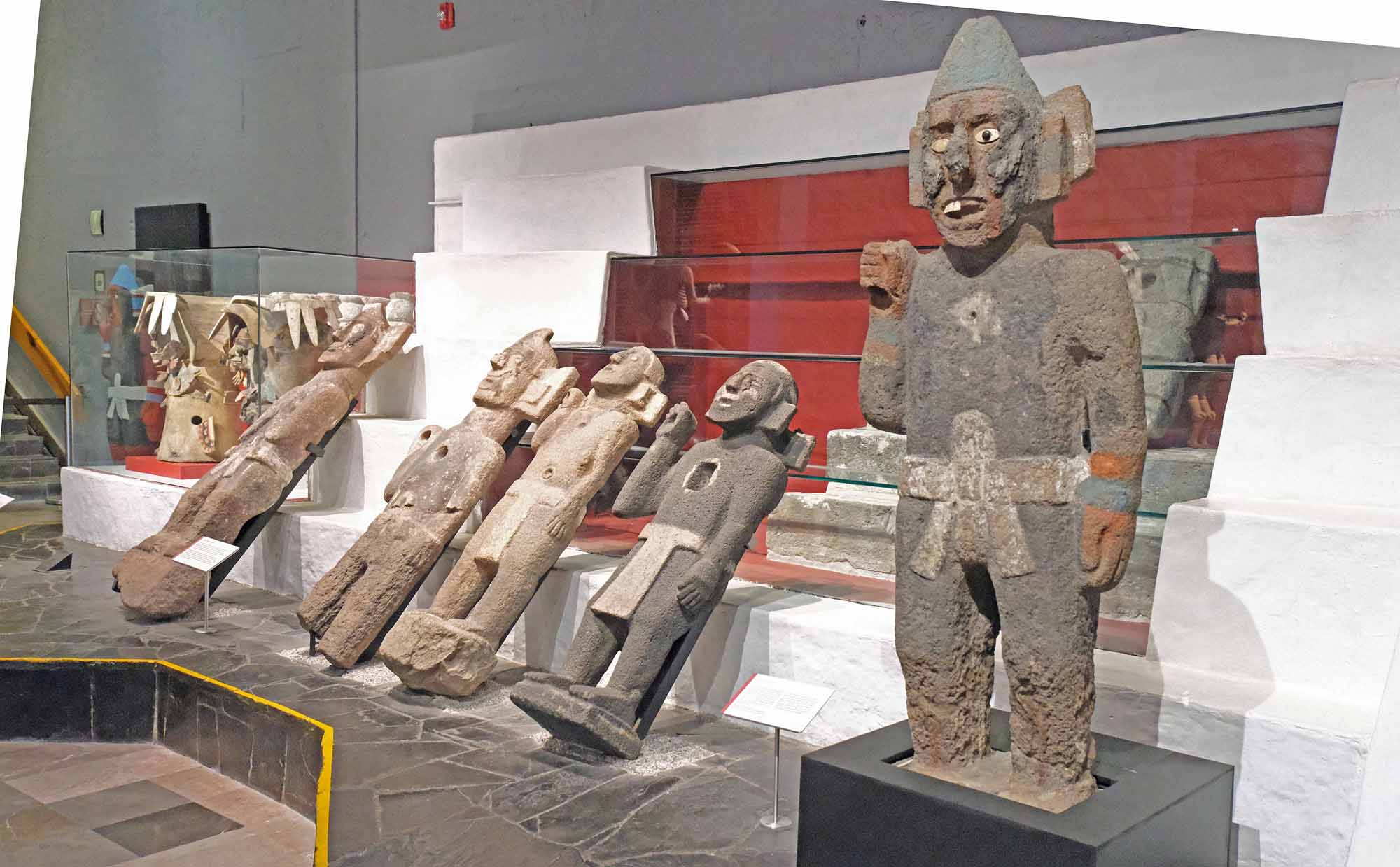
↑At the Templo Mayor Museum.
Theory... The bodies of the residents of the main town temple/residence were wrapped in straw mats, bound with string, had greenstone masks tied to them, and laid diagonally on the steps to the temple. Left to decay naturally.
Hmm.
Perhaps we simply have yet to discover a "Cave of the Elites"—not a "Valley of the Kings"—in the hills of western Colorado.